Showing posts with label Travel. Show all posts

Monday, November 5, 2012

Air travel and survivalism

For those of us who travel a lot but worry about things like having basic survival tools with us, 9/11 made things very difficult for us. There are just certain things that you simply aren't allowed to take on the plane any more. The key things for me are light, fire-starting, and a blade, the last of which is completely verboten for carry on. Shy of checking baggage, you won't be able to take one with you. Personally, I find checked baggage an inconvenience, especially if they lose it on the way to your destination! What to do? Here's where I started:

Untitled

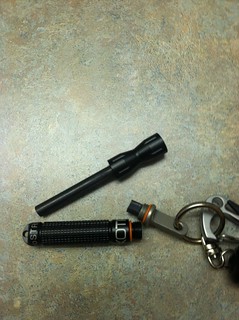
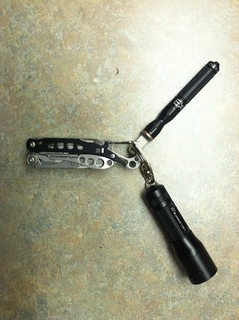
Dealing with the light source is the easiest part. You simply need a small light that fits well on a keychain. I picked up the Led Lenser K3 at the Leatherman store in Portland, but any small light will do. To me, brightness is not as big an issue as battery life, though I might swap to a brighter light in the future. I've been in hotels where power went out and found having a light like this on you can make all the difference. It is the second most commonly used item in my pocket kit.

Fire starting is most easily done with a lighter or matches. You can now take these through TSA, though occasionally you will get accosted by a less updated agent. I like having something that has less failure opportunities, like a magnesium fire starter. Some people refer to these as flint and steel, though that isn't accurate. I found a small, compact striker that expands into a comfortable size, the Exotac Nanostriker.

Untitled

I have a number of similar strikers, including much larger ones for long term use, but this has the advantage size, a replaceable rod, and attached striker. It throws hot sparks with very little effort. The downside is that there is very little room for tinder in the starter itself, but you can squeeze a tiny amount in the top. Otherwise, you need to plan on carrying more or going without. I'm planning to carry a small pill bottle with some fire starter just in case.

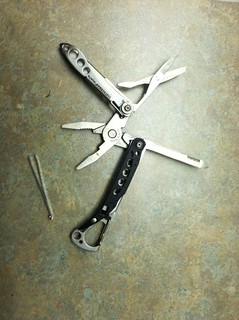
This leads us with our problem of a blade. As I said, not much to do here for a real blade, but Leatherman has decided to build something with our needs in mind. The Style PS is a micro-sized multi-tool built to be TSA compliant, which basically means it has no blade on it.

Untitled

Unlike most of the Leatherman keychain tools, this one replaces the scissors with pliers and places the scissors in the blade position. The scissors are small, but sharp, passable as an emergency blade if needed. You also gain a nail file with screwdriver end and a bottle opener that is also a caribiner clip. Finally, there is a small pair of tweezers that are surprisingly good for their size. I've found the pliers to be surprisingly useful for their size and use the scissors more than I expected. Honestly, I've been very pleased with these since I've picked them up. Of course, the TSA expects anything that looks like a multi-tool doesn't meet their standards, so I always like to make sure they are out and can be easily checked by agents.

Anyone else out there travel a lot by air? What do you carry with you?

Sunday, July 8, 2012

Getting through airport security

What is it?
There are some simple things anyone can do to make dealing with the TSA less painful and assure your get to your gate on time.
Why do it?
You don't want to be that person doing a mad dash through the airport, hoping they'll hold your flight. First off, they won't. Second off, you'll end up on the plane needing to use the bathroom or starving because you had no time to deal with it before hand. Or you'll be that person in front of a Road Warrior slowing them down and making them angsty.
How did I learn it?
I started flying for work just a few weeks after 9/11. I saw first hand all the steps the TSA went through figuring this out, and that was a little painful. Currently I fly about every other week, so I have this pretty well down.
How do you learn it?
Honestly, follow these tips and you'll be in good shape!
1) Pack wisely - If you're planning to check a bag, put as much as you can into that. Specifically, put all your toiletries, multi-tools, pocket knives, tools, and non- essential electronics. The less you have to explain to an agent, the better. Check the TSA banned carry-on list and accept it as gospel.
2) Carry-on - When packing your carry-on, smaller is better. Space WILL be limited on the plane, but it's also easier to muscle a smaller bag through the scanner and tote it from gate to gate. If you're taking a laptop, don't strap it down yet, it will come out later. Also, leave enough room in your bag for the contents of your pockets. Finally, if you have toiletries in your carry-on, put them in an outside pocket.
3) Toiletries - are a pain. At this point, they really don't check often to make sure it's under 3.2 oz (that .2 comes in handy, BTW, on certain hair products!) but stay small to be safe. Big items DO get pulled. All liquids and gels go in your 1qt ziplock, but I put that ziplock in a mesh bag with my other non-liquids, like toothbrush, razor, deodorant, comb, etc.
4) Heading out - The TSA tells you to arrive 1.5-2 hours before your flight, which is likely overkill, but I stick to it. I'd rather be sitting in an airport for an extra hour than sad they wouldn't let me on. Honestly, at this point I have so many points and miles I get to skip most of the security line, but I still show up early. Parking, security lines, shuttle buses...any of these can be a hiccup. Finally, put on your easiest shoes to slip on and off, then out the door you go!
5) Checking in - I often do this at home before leaving, especially when flying Southwest. This is really great when you don't check bags as you can print your pass and walk straight to security. Drop 30 minutes from your arrival time if you're flying this way. Add 30 if you're flying with firearms. Have your confirmation ready and your license out.
6) Prepping for Security - before you get to the line to the gate, your real work begins. Put everything in your pockets into your carry-on (or jacket) EXCEPT your boarding pass and ID. I also often put my belt and watch in if I have the space.
7) ID check - hand the nice person checking IDs your boarding pass and license/passport. Don't fidget or fuss, but be polite and friendly. This can actually save you time, as they often have control over the one you head into, so if they take a liking to you they'll send you to a faster one. DO NOT say the words bomb, gun, terrorist, etc. They don't like those jokes. Also, do not downplay their job or share your opinions on the Theater of Security. 
8) Queuing up - pick what looks to be the fastest line. Avoid the one with a family with kids or old people in wheel chairs. Also, when possible avoid vacationers. Find the one populated with folks in business attire, or that already appear to be ready to go, even though there are 2 or 3 folks in front of them.
9) Bins - Once you get to the stack of bins,your real work starts. Take one if you have no laptop, 2 if you do. Throw your laptop in one, stack the other on top, then start loading up with your shoes, toiletries, watch, belt, ID, and boarding pass. I put the whole mesh bag in the bin and don't separate the ziplock out. Put them on the rollers, followed by your bags. If space is limited, stack your bags on top of each other. Do a final check for any metal on you (earings and wedding rings are fine, leave them on), then wait until your last bag/bin enters the X-Ray. Seriously, wait! I have seen folks go through and others jump ahead or the TSA pull it out when they don't know who it belongs to. Wait!
10) metal detector/body scanner - This is the biggest controversy in recent years. Most aiports now have the back scanners that caused all the hoopla. The TSA has gone through lengths to only show "hotspots" to their agents which then need a pat down. Anything, including paper, will show up as a hotspot. Multiple layers of fabric can as well. This is why we put everything in the tray. The metal detector is only picky about metal, but you may not always know which one you'll be going through. You can opt for a pat down if you prefer. And if you wear a kilt, you will get one more than likely. Ask me how I know! ;)
11) The other side - wait patiently for your bags. If they have to check one of them, DO NOT reach for it unless they tell you to. They will wait till your other bags come through to check it out. Be aware that tools of any type will normally get yanked, so check them before you get here. Also, multi-tools are a no-no, except for the new TSA approved Leatherman Micro, which you will have to explain each and every time. Trust me. Once you have your stuff, get out of the way to re-dress. Don't cause the rest of the line to wait for you!
What else can you tell me that may not be common knowledge?
Always double check your carry ons before you go! You don't want to lose something to the TSA due to your negligence. And it really does get easier with experience. Soon, like me, you'll be cursing the amateurs in your path!

Friday, March 25, 2011

EDC follow up, now with pictures!

I figured I would put up images of what is actually in my bag since everything is moving over from the old bag to the new one as a follow up from my EDC post. First, the new bag(s) is here, so let's look!

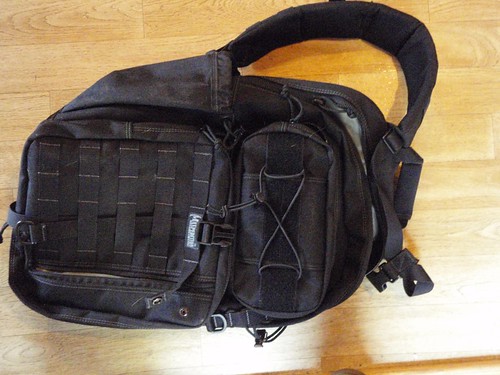
Maxpedition Kodiak Gearslinger
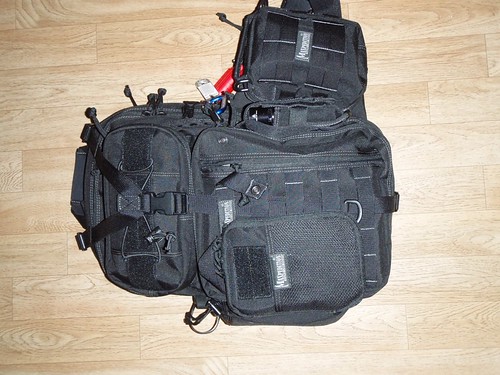
This is the main bag. It is slightly taller and a little less deep than my old bag, but far more pockets. I'll let you explore Maxpedition's site for all the ins-and-outs, but here's mine unloaded for comparison later on.
P3250278
I'm seriously impressed with the construction. The stitching is great, YKK zippers feel solid, and the pocket layout is sensible. It has no real pockets for pens and the like, but that's why I picked out a few other pouches to attach.

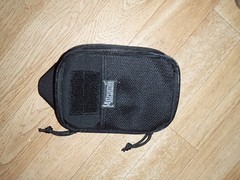
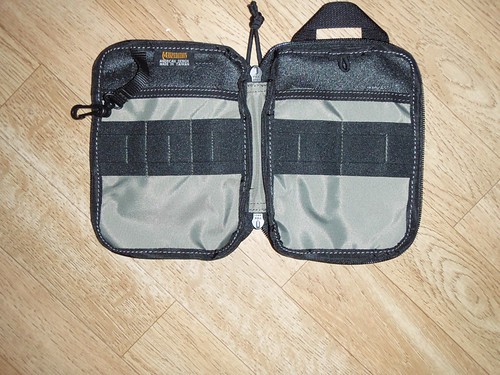
EDC Organizer

P3250268
P3250268

This is my solution to no pen slots and the like. It will connect onto the main bag using 2 Blackhawk Speed Clips, which turn out to be quick and easy to use.

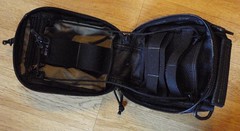
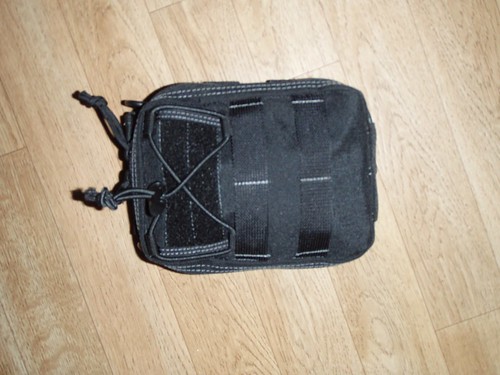
FR-1 Pouch
I wanted to move a few things to the outside and my first aid kit was one of them. This was the solution, and gives me room to add a few missing items.
P3250275

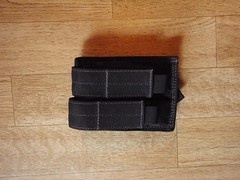
Double Magazine Pouch
A difficulty in my old bag was keeping my flashlight and Leatherman. They lived in a side pocket, which made them less speedy to get to without taking the pack off. I picked up this, designed for gun magazines, to hold them both.
P3250276
It has an extra advantages of doubling as a belt pouch for both items and being able to easily come off at the airport.

Universal CCW Holster
I don't actually carry a pistol everyday, but I wanted to try this out as an option for easily carrying my fixed blade knife, as I spoke about here. No picture this time, you'll see it in a minute and it isn't that special. It hooks into the loop fabric in the back pocket on the main bag.

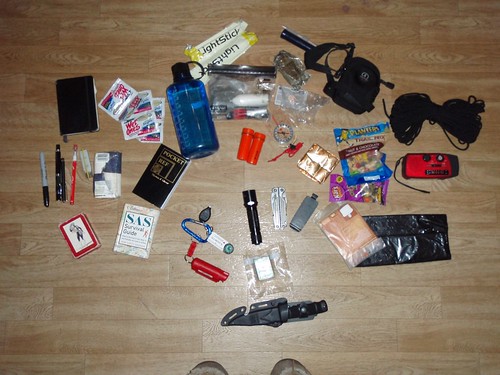
All that stuff!
So, other than a laptop and/or iPad, plus the occasional jacket, here's everything I carry in my old bag.
P3250266
Most of this you can identify from my previous post
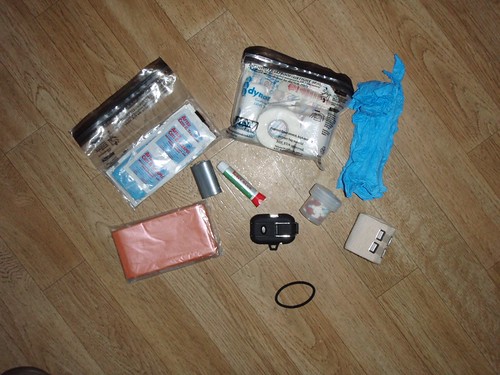
A few things I missed, many of which others pointed out in the comments, include a water bottle, tissues, some snacks, and my emergency radio/light. Missing in all this is the first aid stuff. Let's look at that.
P3250272
Again, much of this I mentioned and I'll be doing a med kit post or 2 later on, but the key thing I didn't mention (and motomuffin did) is gloves. Be safe! I also have a tube of super glue in there for sticking cuts back together. Not always pretty, but very effective. Not shown is the piece of moleskin I carry for blisters.

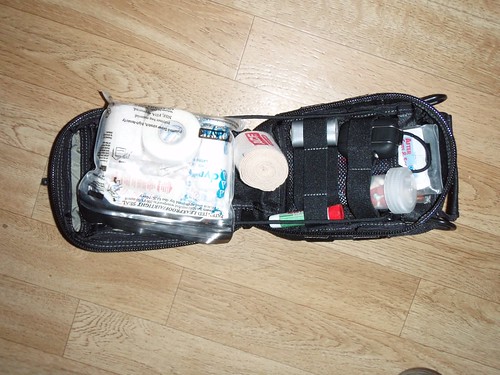
Here it all is in it's pouch
P3250270
and all closed up
P3250269

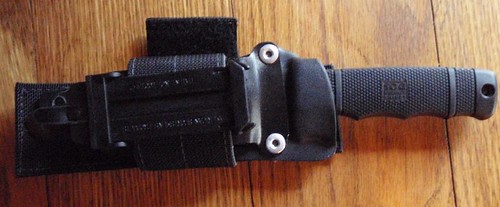
The knife has had some modification to the sheath (easy to do on this model) and been put into the the holster, so it now looks like this:
P3250280

All zipped up!
Putting everything in the bags, zipping it up, and attaching the external parts to where they belong, here's what we get.
P3250282

You'll note that I put the first aid kit and sheaths off to the side of the bag. This is largely an access bonus but also keeps the bag from sticking too far back from my body. When spun to the front I can easily get to flashlight, multi-tool, and first aid kit.

First impressions
I've only been carrying this rig for a few days, but I already like it. I have easy access to stuff, better organization, and the comfort level is good. We'll see how it fairs over the coming weeks, months, and years!

Tuesday, March 22, 2011

Everyday Carry, or "What's in your backpack?"

What is it?

Whether we think about it or not, we all have some level of what in some circles is called EDC, or EveryDay Carry. This is a term often applied amongst gun enthusiasts to their chosen self-defense weapon, but has been expanded to include those items you make sure you always have on you or very nearby. It is the latter we will be talking about in this post.

Why do it?

The simple fact is there are certain things we need on us in our daily life and many more that would come in handy. Women have been masters of this for years. Think back on all the things your mother could pull out of a purse or handbag at a moments notice! Men, of course, have long resisted the desire to follow suit as it just isn't "macho" enough, but many of us have been carrying backpacks long past our school years. Laptops have become a great excuse to carry more with us without looking like we have a "man-purse", but a recent surge in messenger and sling bags, many with a tactical slant, have made it more acceptable to carry more stuff with us.

While we so often expect to be able to hit a convenience store when we need something, life doesn't always work that way. To be clear, I'm not talking about a "72-hour" or a "Bug Out Bag", which tend to be larger survival style bags. I plan to tackle that at some point, but here I'm speaking of something far more universal and versatile. A few simple things carried in a comfortable bag can make all the difference between a good or bad day!

How did I learn it?

At this point, do I even need to mention Boy Scouts? Seriously, "Be Prepared" sticks in your head! But I honed this over the last 20 years, first in college, then in the working world. My time as an EMT had an immense impact in this area as I learned you want to have everything you are likely to need when you get to a patient, but you can only carry so much, especially into, say, a wrecked vehicle. When I moved into IT and a laptop became something I toted around all the time, I shifted things again. Finally, learning to ride a motorcycle has led me to rely less on what might be in my vehicle (otherwise a large pickup), causing me to have a refined list of things that I never want to be without.

How do you learn it?

I'm going to give you my opinions here, then you should absolutely read what other people say. Mostly, however, you should try it out yourself. Some of this you'll discount immediately, some of it you'll take as gospel, but a lot will be experimentation. Try it out, don't spend a lot upfront, and see what works for you. But put some thought into it, otherwise you end up with more than you bargained for, like so many mothers have done!

The bag - For many of the women out there, you already have a favorite EDC or 2 in the form of a purse. Many, like my wife, don't carry a purse in the traditional sense but a small shoulder bag instead. Some of us favor backpacks or laptop roller bags. I've carried a variety of things over the years, including a waist bag (essentially a big fanny pack). Whatever you settle on is less vital than a few key criteria.
Is it comfortable for you? You're the one who will end up carrying it all the time, so your opinion is the most important. If you will be carrying a lot of weight, like a laptop, this is even more critical.
Is it maneuverable? This is why I moved away from a roller bag for my laptop. I found it was terrible on rough terrain and even slowed me down in the airport. The extra weight of a backpack was worth it.
Does it have space for what you'll be carrying? It seems obvious, but buying a bag then realizing there isn't a pouch that will handle your ever-present hardback book will certainly disappoint. When possible I like to take my largest item to the bag to verify, but when ordering online pay close attention to the dimensions. On the same note, too big will be bulky and lead you not to carry it, or carry too much!
Is it durable? This may not be a big issue for some, but I hate falling in love with a bag then having it fall apart or look terrible after a few months of work. Many fabrics such as canvas, nylon, Codura, and leather hold up well to continued abuse
Can you get to your stuff? Organization is often overlooked. I've passed it over many times myself, and I've watched others have to empty out a bag to find a single thing they wanted. Think about it up front, but realize you can organize in big compartments with smaller pouches and bags.
My current bag is the predecessor of this one, but after about 6 years of constant use it is wearing thin, so will be replaced this week by the Maxpedition Kodiak. I realized I almost never use both straps for the backpack and wanted better organization options, so we'll see how the Kodiak serves.

First aid - One thing I'm big on is having some first aid supplies on hand, no matter who you are or how much you actually know. Band-aids, some gauze and tape, tweezers, and alcohol wipes are a bare minimum. I also find it handy to have a bit of my vital medicine on me at all times, along with some painkillers. If you don't know what to put in a kit or like getting it all together, light and affordable(ish), check out Adventure Medical. They're industry leaders and have a variety of products you can pick up online or at your local EMS or Cabelas. Even if you don't know what to do with the items in the kit, someone around you might, but without the items available their knowledge may be for not. And, of course, take a first aid course! :)

Fire and light - Less people smoke these days (which is a good thing!) but it means few folks have a lighter or matches on them. This is a small, easy item to have on you that comes in handy whether you get stuck in the woods, need to scorch the end of a nylon strap, or sanitize a needle to dig out a splinter. I carry both, and also a magnesium fire-starter, but I'm all about the backup.
Similarly, you never know when you'll need a flashlight. I carry 2 myself, a small keychain-style LED light and a palm-sized tactical (very bright) one. They're great when you lose something under your desk, need to check out an issue with your car, or find yourself in a dark parking lot. I also have a few glow sticks to act as quick area lighting/flares.

Tools and knives - I've talked about pocket knives before, and your EDC is a good place to carry something to back that up. A multi-tool that may be more than you want in your pocket is perfect here and serves a lot of purposes. I also carry a fixed-blade knife in my EDC, but that may be more than most want.
On top of those, I have a few other more survival based items. One of the most used is a cheap poncho. I keep replacing it as it comes out in those moments when I forget a rain coat. A compass is handy, but this is only good if you know how to use one, and best with a map. I also have a small, straw-style water filter which I have yet to use and hope never to do so.

Writing items - This may seem obvious, but having a pen when you - or someone else - needs it is a huge boon. I'd also remind you to carry something to write on besides gas receipts. I have a small Moleskine-style notebook I got at Barnes & Noble with tear-out pages. I've recently gotten back into the habit of carrying a Sharpie as well, a habit from my EMT days. I'm less likely to be writing on people with it now, but it still works on almost any surface you come across.

Defense - We hope never to need it, but it would suck to need it and not have it. I'll skip the whole topic of firearms for another post as it's such a polarizing topic, but I will encourage everyone (even if you do carry a gun) to have some form of defensive spray as a non-lethal option. I won't go into the choosing of pepper spray here, but send you instead to this great site about it. The idea of a self-defense item is not to permanently disable someone, it is to give you time to get to safety. Whether you do that with pepper spray, a taser, a defensive tool like a kubotan, a tactical flashlight, or whatever, just having a way to gain a few seconds to run to your car or a safe building can make a huge difference to you and those who hope you make it home safe. Give it some thought.

Random stuff - There are a few other things I like to carry with me that may not be important to others, but I find useful.
Trash bags - I have about 4 of these at any time, the large, black ones. They make impromptu ponchos, ways to carry wet or dirty clothes, and, of course, work for trash. They could be used for a shelter if you were hard up, but that's an extreme.
Paracord - The mainstay of survivalists everywhere, this thin, light cord works for so many situations. It holds knots well, doesn't stretch easily, and is fairly cheap. Use it to lash something onto the roof of the car, hold something onto your pack, or any number of situations where rope comes in handy. A 50' bundle is small and easy to carry.
Books - I almost always have one with me. Actually, I DO always have my pocket version of the SAS Survival Handbook with me, but I also normally have what I'm reading or my iPad so I can keep myself entertained during long waits. Of course, the Survival Guide has other uses than general reading.
Cards - Nothing cures boredom quicker than a game, in my experience, so a deck of cards is handy when stuck at a slow restaurant or waiting for AAA to come give you a tow. I currently only have a standard deck, but sometimes I carry other quick, small games like Fluxx

What else can you tell me that may not be common knowledge?

I've laid out a mess of stuff here, and I'm hoping others chime in with their experiences. It is worth noting that one bag will not likely serve all of your needs. I've changed what I carry over the years and bags have changed with me. When traveling you may need to pair down to meet space or TSA requirements. This is actually part of what led me to my new EDC bag, specifically the integration of the MOLLE system.

While designed for the military and obviously appealing to the "tacti-cool" crowd, I see a lot of appeal to those of us who travel a lot or need to change up what we carry. As pouches can easily be swapped on or off the webbing, it becomes possible to mix and match to create the perfect bag. Better still, in minutes you can take the pouches with your multi-tool or pepper spray off the bag and tuck them in your checked baggage before heading off through airport security. I'll be putting this bag through its paces in the near future and I'll let you know how the system works out for me.

The single most important thing to remember is that YOU have to carry this day in and out, so build the system that works best for you and don't be afraid to change it when it doesn't.
Tuesday, October 19, 2010

Preparing the inside of your car for winter driving

What is it?

There's a list of things to be done to your car when prepping for the winter. snow tires, anti-freeze service, lighter weight oil, winter wipers...the list isn't too long and not always applicable to every vehicle. Some of you may be living in areas where winter is what we in New England call "fall". I want to speak instead about the things we can take with us as we drive during the colder months in the event something goes awry.

Why do it?

Being stuck somewhere with a flat tire, a dead battery, or worse is never fun. During the colder months, it can be downright dangerous! A little bit of money, some pre-planning, and you'll be a lot happier. Years ago (OK, decades ago) while we lived in Ohio, my father got stuck on the way home in a massive snow storm. It took him over 6 hours to do a 30 minute commute. Fortunately, he had a full tank of gas and had taken some precautions, many of which I think get ignored by the modern traveler. We expect gas stations on every corner to be open 24 hours, roads to be plowed minutes after the first flake is spotted, and AAA to have response times better than Dominoes pizza. Hopefully, all 3 are always true, but reality is a cruel mistress.

How did I learn it?

I know I keep saying it, but Boy Scouts had a big impact on my urge to be ready for whatever can happen. "Be Prepared" is a motto that tends to stick with you. There have been times in my life where I've forgotten to follow that motto and I've always regretted it. With my first car, a few things always got carried. Now, I'm more prepared than ever, probably over-prepared, but it provides a level of comfort I feel is worth the loss of cargo space. I'm continually looking at how I can better refine my needs.

How do you learn it?

I'll give you some of the key things I carry and why. Hopefully others will weigh in with their thoughts.

To prepare we have to think about what can happen and look at the likelihood and duration of the problem. These will give us areas to tackle. Most will be mechanical, some environmental, and maybe a few catastrophic. We'll begin with a list of everything I carry with me, then we'll talk about why I do it. I'll skip those items that are standard on most cars (spare tire, jack, etc), though I will mention them in some of the areas below.

Motor club membership (I have AMA, many use AAA)
Jumper cables
Flares
Tire repair kit
Wagan PowerDome
5 Gallons of gas (whenever traveling more than 50 miles)
basic tool set (metric, as that is what my truck uses)
windshield washer fluid
pre-mix anti-freeze (50/50)*
flashlights (2)
multi-tool
"escape" or rescue tool
shovel*
sand*
atlas
GPS
ice scraper (2)*
hatchet and small saw
first aid kit
hat and gloves
spare sweatshirt
wool blanket*
winter boots*
rain poncho (2)
cell phone
Nalgene water bottle
trash bags
candle lantern
lighter (2)

Aside from those marked with the *, these items remain in my truck all year long. I actually carry a lot more than this, but these I consider the bare minimum. Many of them reside in a single backpack that can be easily moved around the vehicle, or taken with me into another car, etc. My wife has a very similar setup in her car. It takes up surprisingly little room when all put together, and much can fit into the existing small spaces in your vehicle (glovebox, wheel well, etc).

So, why all this stuff?

Mechanical issues - the things most likely to happen are problems with your car. They can happen anytime, but a few are more likely in the winter. As I mentioned above, prepping your vehicle for winter is a REALLY good idea. Part of the benefit of this is it makes you look at some of the critical areas of your car and make certain it can handle the season. A good tune-up will also help in this. If your mechanic can catch a problem before it happens all the better! Changing tires for snow tires means someone will have seen the tires before you drive on them.
Of course, things still go wrong. A dead battery or flat seems most likely. A flat tire can be dealt with by having a spare in good repair and a decent jack. The battery is a little tougher. In an area with other vehicles, you can likely get a jump, but only if you have jumper cables. What if no one is around? This is why I like the Wagan PowerDome, since it is a stand alone unit. Additionally, it includes a radio and an air compressor, both very useful tools. Finally, the inverter means you can charge cell phones or other devices if your car is dead.
I like having tools so I can deal with stuck hoses, air filters, etc. Even if you don't know a lot about car maintenance, someone may stop to help and not have tools themselves. Having a flashlight or 2 (since one could go dead) to light your way, flares to let others know you have a problem, and extra fluids in case you overheat is further insurance.
If you don't have AAA or an equivalent (I use AMA as I'm a motorcyclist, but the coverage is very similar), get it. It is really worth the annual fee to have a safety net when you need it.

Environmental issues - snow, ice, sleet, freezing rain...none of these are pleasant while driving, but are a reality for many of us. They come with other possibilities like getting stuck, frosted windshields, and slick driving conditions. A shovel for getting snow out from around your tires is invaluable as even a well plowed parking lot may leave your car blocked in a snow bank. Scrapers are great, though often break, so I carry 2. Since I drive a pickup, I carry sand in the bed of the truck, and some of that can be shoveled out to aid in traction on icy spots. And don't forget that trees weighed down by heavy snow and ice can break and block your way, especially on rural routes. A saw or hatchet can make quick work of these obstacles, not to mention warming you up a bit for your efforts.

Catastrophic issues
What if any of the above happens in the middle of nowhere? Or if there's a massive weather emergency that has all the emergency services, including AAA, tied up for hours? Worse yet, what if you have an accident, either alone or another vehicle? These are all things we hope never happen, but we're better off if we prepare.
Certainly you can't expect to fix everything that might happen in such circumstances. This is why I list a cell phone as invaluable. Calling for help is critical, just make sure it's charged and ready to go! A cheap, pre-paid phone that is left in the car isn't a bad idea, either.
If you're stuck in your car (or out of it) when it's cold, extra clothing may be the difference between life and death. I leave gloves, a hat, and boots in the car in case I'm even stuck wearing dress clothes when something goes wrong. Leather-soled dress shoes won't serve me well and may plant me on my butt! If I need to sit in the car for any period of time, a wool blanket helps a lot, and a long-lasting candle lantern will provide light and even some small amount of warmth with little risk of fire.
When you're out of the car and it's raining, a poncho is great and also keeps some heat in. Trash bags can be placed on snow to keep your clothing dry, used to cover broken windows, or as a way to keep either wet things contained or dry things dry.
In the event you need to get out of a vehicle in an accident, I like having a rescue tool within reach to cut the seatbelt and/or break out a window. Cheap money for a little more piece of mind. A basic first aid kit can deal with some of the after effects if you find yourself in an accident.
Finally, I like to have water on hand as you can't go very long without it. During the winter, water goes in and out of the car with me, lest it freeze. It's fine when you run into a store for an hour or 2, but longer than that and it comes with me. I do also carry a steel cup that I could use to melt snow with my candle lantern, but that may be more extreme for some of you. :)

What else can you tell me that may not be common knowledge?

Various stats show that you're likely to be in an accident every 6 years, with an average of 6 million happening a year. Most of those will be minor, but in the winter even a minor setback can be difficult. Personally, I like to be ready whenever possible and work to reduce risk where I can. Little things like proper maintenance and refilling your tank before you're on 'E' help. Why not take a few more steps to get safely to your destination, even if it takes longer than you expected?

One final word of caution to everyone who thinks 4-wheel drive means you won't get stuck. If you hit ice, it doesn't matter how many wheels have power, they all start spinning. Take some time to practice with it and realize it doesn't mean you should drive faster than everyone else!