Friday, July 12, 2013

The value of basic handy-man skills

Let's say the world comes to an end tomorrow. Will knowing how to paint your walls or fix a leaky pipe matter? No, we'd all be gone. But, since that's unlikely to happen, we might as well plan for things to move on and for smaller emergencies to impact our life. Things like stuck doors, torn screens, and leaky sinks crop up all the time. Yes, you could call in a professional to deal with it, but you can save a few bucks and learn some things by doing them yourself.

For months, nay, years now, we've been living with bad plumbing in our kitchen. Not the constant drip that drives you slowly insane and you notice all the time. Instead, we had a few small issues that occasionally piled up. A faucet that leaked around the base when in use, but never really caused a problem was the most minor. Poor plumbing run in such a way as to interfere with under-the-sink storage was another. The worst was that the drains from both sides of the double-basin sink didn't like to stay attached. Maybe the trash can would knock it out of line, or placing a heavy item for filling, such as a bucket or dog waterer, would shake things loose. Next think you knew you had a trash can full of water, or worse if it was on the side without a receptacle to catch it! This would crop up occasionally, I would get upset and declare this needed to end, fix it "for now", and then life would get in the way and I'd forget until the next incident. A few weeks ago I declared that enough was enough.

Now, what could have been a simple project wasn't likely to stay that way for long. Neither my wife nor I much cared for the existing faucet, so just replacing it seemed the best bet. And while I could just fix the drain issue, the sink itself was a bit old and uninspiring, so it had to go. So far, not bad. But what needs to be understood by anyone who has never done such a project is that nothing will remain simple.

Step one in the whole process was to pick out the pieces we wanted. We hit the local Lowes and started to look at sinks. There's a new trend towards composites, but I'm not yet convinced of their long-term look, so we ruled them out. Most of the stainless models were little better than what we were ripping out. Then we spotted it, a beautiful porcelain white number up out of reach. It featured a larger left basin, meaning I could demand the right stay devoid of dishes for food prep. The sinks were deeper than our existing model, which would provide more room to fill the dog waterer and ease the plumbing. And it was enameled cast iron, one of my favorite combinations of all time. We needed this sink!

Sadly, our Lowes didn't have it in stock. However, a nearby one did and my wife agreed to pick it up after work. Neither of us pieced together that this sink was going to weigh in the neighborhood of 80 pounds when this plan was conceived. Thankfully, she got help to load it up and then we both lugged it into the kitchen to sit until needed.

For a new faucet, we picked a pretty cheap one that looked nice. Turns out much of it is plastic, so durability may be a problem, but we hope to sell the place before that becomes a serious issue.

Armed with these materials, I tried to determine what I would need for plumbing supplies. After numerous calculations and measurements, I felt ready to roll. I decided to wait on purchasing items until I took the old sink out. This brings us, really, to the first critical skill in home repair: home demolition.

Breaking things is easy. Breaking just the parts you want can be much tougher. The night before everything went in I set about to rip the old sink out. This meant everything was gone from that part of the counter and all dishes were clean. Knowing that I would be out of town for a week the day after this sink went in meant I had no room to wiggle. If I broke it too badly, I'd have a very, very unhappy home situation when I returned.

When removing the sink, I broke the seal (OK, it was broken, but not all of it) of silicone around the lip using a screwdriver. Our counter top is tile, so this was pretty easy to do. I then SHUT OFF THE WATER and disconnected all the plumbing. Really, shut off the water under the sink before any of it, so you can then bleed the lines and let it drain somewhere other than your cabinet floor. Once this was all done, I tried to remove the sink before leaning there were clips keeping it attached to the counter. With those removed, the sink came out and went outside.

Now the fun began. I realized that the water lines were actually PEX hose, a form of flexible plastic pipe. I don't much care for this and decided to use braided steel lines instead. I realized, too, that the base of the new sink placed the plumbing further back than the old one, so all those measurements and calculations were for not. I opted for bed instead of starting any more, hoping the next day would go smoothly.

Before heading out for a run in the morning, I took some more measurements. I stopped at the Home Depot on the way back (I'm equal opportunity on the box stores) and grabbed everything I thought I would need. Hah! Never, ever believe this will be the case. I got home and started in by cutting the old plumbing off at the highest point I could. This was at the floor of the cabinet, which I proceeded to fall through due to rot. Oh good, more fun! I proceeded to rip this rotting press board out as well, then measure for a replacement. It was now a plumbing AND carpentry project. At this point I decided I should take a picture or two.

Untitled
Untitled

The first part of putting it all back together was to replace the floor of the cabinet. I had enough plywood around to make that happen, so I dragged out the saws and got to work. Learn how to use different saws, as they all have their place. My table and jig saws came out for this one, though the circular would have worked as well. As I the original floor had been stapled and channeled in place, I needed to make blocks to brace the new floor up. The prior floor had 2 holes in it as it was pre-fabbed to fit a variety of situations. My new one only needed a hole exactly where the plumbing was, which is what I did. Everything cut, I took it inside to see if I'd measured properly. Apparently, I did:

Untitled

Now, back to plumbing. I quickly realized I had purchased the wrong size pipe, but before my return to the store I set up the new sink with drains to take even more measurements.

Untitled

You might notice that the sink is sitting between 2 chairs. Had I thought this out, I would have gotten help to do this, but as I was home alone at this point, I had to do it on my own. I started by placing it on cardboard, one side at a time, then putting the chairs in place and giving it a go. Doing this pointed out to me that I could never get it into the sink hole on my own without breaking the tiles around it. I still had plenty to do before help got home, so I checked some fittings, glued up the PVC for the new drain, and installed the faucet (which is actually in place on the picture above). I decided that the drain plumbing would go in after the sink was in place to verify that I had everything right.

When our teenager got home from work, I immediately conscripted her. First we ran a bead of silicone around where the sink would go. The opening was a little wider than I would have liked, but had enough overlap to handle the weight of the new sink. Once the seal was down, we hoisted the sink up and in by first lowering my edge, then having me slide under the sink to slowly lower hers. I cleaned up the seal and crawled underneath to tie it all in.

Untitled

One thing you should realize on modern plumbing is that much of it doesn't require soldering. Screw on fittings, glue, and pressure hold a lot of parts together. That means that the entire setup can go together in a matter of 20 minutes that looks like this:

Untitled

While I know I didn't go into much in the way of plumbing technique in this post, the point was more to convince you this stuff isn't rocket science. Doing this myself saved us a few hundred dollars in labor and meant I felt pretty accomplished when all was said and done. It's all stuff I've learned over the years and improved on by doing. Try crawling under you sink and just seeing how it all goes together. Maybe you'll realize it isn't as horrible as you thought. And maybe you'll someday use this to plumb up a water purifier when the zombies come!

Friday, June 21, 2013

Critical preparedness skills

It's been a while since I've talked about specific skills. Let's leave the political crap behind for a bit, shall we?

I realized when thinking about posts, specifically skill related ones, that it might make sense to build out a list of what I consider critical skills, then get your input to expand it. Without further fanfare, here we go (with "brief" explanations/justifications). I'll also list what critical slot they fill

CookingFood - if you can't eat, life without takeout will suck.
Water treatmentWater - easy to pick up, but even more vital than cooking
Fire buildingEnergy - including fire starting
PioneeringShelter - knot-tying and lashing, allows shelter and tool building on the fly
FirearmsSecurity/Food - good to know about even if they don't fit into your security philosophy, if only to handle safely
ArcherySecurity/Food - your standard backup/predecessor to the gun, takes way more time to become proficient

GardeningFood - growing your own assures a constant source, especially if you add greenhouses
Handheld radio basicsCommunication - when there's more than one of you, you need to talk
Knife use and careFood/Shelter/Security - as your most versatile tool, it needs to be in working order
Food and water storageFood/Water - keeping the basics around
Land navigationNavigation - getting around without electronics
First aidBasic Health - from boo-boos to heart attacks
Foot careBasic Health - if you can't walk, you're a sitting duck
Emergency planningGeneral - without planning, it can all fall apart
Mental fitnessBasic Health - keeping your head (and those of your group) together
Leadership/group dynamicsCommunication - even if you aren't a born leader, you need to know how to deal with them and people
Basic hand tool useGeneral - shovels, hammers, screwdrivers, oh my!
SignalingCommunication - getting found or passing on messages without electronics

Let me know what I missed, and maybe what topics you'd like me to expand on sooner than later. No, really, just take a few minutes and comment right below!

Edited for added skills from readers:

Gathering woodEnergy/Shelter - for firewood, pioneering, and tool making
ForagingFood - Non-animal wild nutrition gathering
Hunting/TrappingFood - Animal wild nutrition gathering
Survival hygieneBasic Health - keeping healthy without running water
Alternate medicineBasic Health - getting by when there isn't 'modern' medicine
Tool makingGeneral - fixing broken tools or crafting from scratch
Primitive laundry and dishesBasic Health - cause getting sick during tough times would suck
Preserving foodFood - making what you gather last
Keeping fitBasic Health - being in shape keeps you in shape when you're working harder
RationingFood/Water - how much do you really need?

Tuesday, June 18, 2013

Liberty: Use it or lose it

There has been a lot of talk in the past few months about a number of our rights as citizens of the US and how they should or shouldn't be interpreted. It should come as no surprise that I have thoughts and opinions on these incursions. I've already shared my thoughts on the Second Amendment, but it might surprise you that this is not the most important of those "magical" first 10 for which I care. That is a privilege that goes to whichever one is currently the most under attack. Unfortunately, that list keeps growing.

PRISM, metadata, FISA courts...these are the buzzwords now. Why should we be upset that the government has access to our personal data while we willingly give it away to private companies more interested in adding to our stock-pile of consumed junk than watching gout for threats to our way of life? To me, the answer lies right in the question. When you get a credit card, order from Amazon, or sign up for a gmail account, you agree to allow them to collect that data and use it. True, most of us just click "accept" and never read an EULA, but when we do this we make the choice that we don't care enough to do so. Yet when a government institution gathers broad details in search of crimes that may or may not be happening, they are not seeking our permission and are (IMO) going past the 4th Amendment and the intent of illegal search and seizure. No longer do you have to be suspected of a crime to start an investigation, you simply need to have a phone number or email going to the wrong person.

Combine this with the Supreme Court's decision that gathering DNA from a suspect and keeping it in a national database is acceptable. Now we're moving in on the 5th Amendment, too. Should a crime ever occur, even one where you are not a suspect, your DNA can be searched and compared to crime scene evidence. As wrongful arrests occur more than we care to admit, the possibilities painted are grim, allowing for a future where crimes are pinned to an individual before he is interviewed or aware he might be a suspect. Simply having your DNA on file implies a level of criminal nature that should make us uncomfortable. Being wrongfully or maliciously accused of a serious crime as a minor could lead to a point where you remain tagged for your entire life, worried that having contact with someone unfortunate enough to fall victim to a crime places you instantly on a path of defending your innocence.

Incursions like these, combined with the way in which the snooping was exposed, not to mention other recent scandals around the IRS and the AP, lead to a building distrust of our government. To be clear, I in no way am implying this is strictly an issue with the current administration as it was obviously occurring in prior ones. It does, however, add fuel to the fire of those who are worried about what else the government might be capable of encroaching on. Is free speech truly safe, or by opining on such issues might we expose ourselves to incursions on our personal freedom? Do blogs such as mine put a person on a watch list of those who might be dangerous to national security as defined by those who seek to preserve the power they have gained at the expense of the American people?

Thus do we come to the crossroads of preparedness and liberty. You're all aware by now that I like to plan for the worst, but you also hopefully realize I want to live for the best. To me, this means living the life that I feel is my right as a citizen of this country. That is not a life free from all danger, safely wrapped in a security blanket of declining civil liberties. It is not a life where success, comfort, or wealth are promised me, but rather a life where I can pursue those items within the confines and opportunities afforded me by a document hundreds of years old, yet crafted with hard work and deep thought. That means being ready for the worst that can come from that liberty, but living to make the most of it.

I have a duty as a citizen of this country to live up to those very same ideals. Rights that are not exercised will disappear. We see that erosion today, we've seen it over the history of this country, and we see it in other nations around the world. I have been told implicitly by folks whose advice I treasure dearly that I would be well served by staying quiet. This is something I simply cannot do as a patriot, as a citizen, and as a believer in the ideals upon which this nation was founded. My opinions are put here exactly because we need to exercise and stretch our rights lest we lose them.

Live free, my friends, as best you can. But prepare in the event that freedom is taken from you, by nature, by fate, or by the very government sworn to uphold it.

Friday, May 31, 2013

Gear Pods, First pass

I recently ran across Gear Pods in an article on ITS Tactical. After seeing the pro and looking over their website, I decided they might be worth checking out, especially for specific applications where you want a durable kit that won't take up a ton of room. I'll talk about that more in a later post.

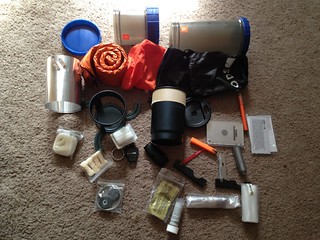
The idea behind Gear Pods is simple - ram as much needed survival equipment into a small, durable tube. What options you decide to go with will vary largely on what you plan to do and where you will keep the tube. They have varying sizes of interlocking tubes, many of them already configured for use. I opted to get their Survival Pro as the base, having read about their small but powerful stove. I added to that their Bivy for a simple shelter option. I then chose to tie it all together using an interlocking ring, which you can buy separate from the core kits. Here's what it all looks like just out of the tube.

Untitled

Everything fits pretty snug into it's container, though there is a little space in the bivy one I might fit a tiny Altoid can into. I'll fill it with spare meds like Advil and Claritan. Otherwise, not a lot of space is left unused. You can see why here.

Untitled

Let's break it down a bit more. The bivy fits in the small container. It's the emergency model from American Medical, not a multi use option, but good in a pinch. The sack it comes in might prove useful as well. Not much excitement here, and something I hope never to need. Still, a body-sized waterproof and thermal bag isn't a bad thing to have.

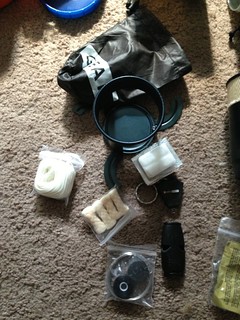
There's a lot more to ogle in the Pro itself. There are 2 major divisions here; the items in the stove, an those in the mug. We'll start with the stove.

Untitled

Gear Pods is apparently fond of stuff sacks, and I'm OK with that. The stove fits neatly into one and helps keep everything in place when you take it out, so you don't dump all your valuable survival gear (value on such inexpensive things going up considerable when you need them) all over the ground. The obvious item in the bag is the stove itself. Small, compact, but sturdy enough to get the job done. I haven't tested it yet, but it's a heat tablet stove, so no great mysteries to be found. Gear Pods does offer a denatured alcohol adapter, but for an emergency stove that seems above and beyond for me. If I were to use it for backpacking I might feel differently.

The stove itself holds the heat tablets for cooking, some emergency tinder (great stuff, used it before), emergency whistle, compass, thread/fishing line, snare wire, nylon cord, and an LED keychain light. The quality on most of these items seems solid overall. Yes, the keychain LED light is limited in what it puts out and the nylon cord is far less useful than paracord, but all good items to have around. I've seen much cheaper in kits. I'd say it's all on par with those items found in any of the kits American Medical puts out, and I mean that in a good way.

Now, onto the mug...

Untitled

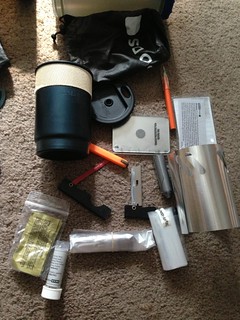
I'm pretty impressed by the mug itself. The construction is solid and includes a strip of (I assume) kevlar around the top to grab the mug when it's hot. The bottom of the mug is somewhat concave which slightly limits its storage space, but will aid in cooking. The capacity with the lid is just over 9oz, so not enough to make many freeze dried meals. You could move half of my meal into the storage bag or a tube and cook it in stages with little problem

This is also where the bulk of the supplies are stored, and there's some good stuff here. Outside the mug and it's lid, everything is wrapped up in the windscreen enclosed in plastic to protect the mug's non-stick coating. "Everything" includes: a pencil and some sheets of paper; a signal mirror;fresnel lens; plastic bag for water; storm matches with striker; folding knife; folding saw; 6 water-purifying tablets; a vial with a needle, fishing supplies, and safety pins; duct tape; and a flint striker. All this is a little tough to pack into the mug and you need to do it fairly specifically with the pencil in the center, but it does all fit.

While there might be a fey items I would add, there really isn't anything I would take out to make room. Together it makes for a pretty sweet kit, and the tubes themselves are valuable for protecting the goods inside and transporting and/or treating water. I do plan to try out the stove and report back on how it works, but this is going immediately into the side case of my motorcycle, in the hopes I never need it!

Friday, May 3, 2013

Preparedness books

I really need to get more of a bibliography going up here. It’s something my wife does well on her blog, but I haven’t talked about here. My plan is to therefore put up reviews of books then link to them on the side. Let’s jump into review numero uno!

The Prepper's Pocket Guide: 101 Easy Things You Can Do to Ready Your Home for a Disaster


The basics
I came across this book as a recommendation from Amazon on my Kindle account. It was affordable and I decided to pick it up, mostly because I get asked at times by people, "How do I start prepping?" I knew going in that I wasn't necessarily the target audience, but I figured, what the heck, I'll give it a try. I could not have been more pleasantly surprised.

The book's formatting groups action items by topics. The categories are as follows: Getting Started, Financial Readiness, Water Needs, Food Supplies, Ready Your Home, Personal Health and Safety, When the Power is Out, and When You Have to Get Out. Each of these is broken out into areas of specific actions that can be taken, skills to learn, and items to acquire. The book caps off with a conclusion and a list of resources for further follow up. At 224 pages, it doesn't take long to get through. The paperback appears to be standard size, though I have the Kindle version myself. This might change

Impressions
The introduction lays out the point of the book very succinctly. Everyone who preps started somewhere, so can you. It took me a while to realize that the author, Bernie Carr, was a woman as these books are so often written by men. The writing style and approach were part of the tip off which was confirmed by comments deeper in the book. I mean this entirely as a good thing as the book is written to be very useful and focused on real life, day-to-day needs. The focus is less on security, collecting a lot of guns, and defending what you have; instead it gravitates towards the no-nonsense, easy to do things that will help you out in a variety of situations.

Each of the book's topics has solid, well categorized action items underpinning it. Instead of most books in this genre which load you up on information but little to do with it, Carr gives you very specific, deliberate items that feel attainable. Well, most of the time. There are a few times when she goes into a bit of a laundry list, such as acquiring specific skills, and others when the action item is very broad. The assumption here is that you will pursue more information on those topics yourself. While some might find this annoying, I think it is impossible to expect a book of this nature to go into too much detail. I found the information presented was more than enough to get you going down the right path in any area. Even as someone who's been at this for a while, I found a fair bit of meat here and items I'd never thought about (like draining my water heater for more drinking water!)

Final Thoughts
Carr does a good job of sticking to her original intent of providing real life benefit. There is very little in the way of explanation about what might go wrong and more focus on how to prevent and cope with it. This book will not scare you into preparing, but instead make the prospect of prepping itself less scary. Her tone and approach have a broader appeal than many books in this genre. She does move quickly through personal security (firearms are covered in 2 short paragraphs) but that is an asset, in my opinion. She avoids alienating a portion of her audience by suggesting further research elsewhere. I also like the fact that she comes through as knowledgeable without seeming a know it all.

For me, the final endorsement of a book needs to be whether or not I would recommend it. Not only would I recommend this book, I would suggest it as the very first book a budding prepper should own. For those already on the path, this book can act as an excellent yardstick to see where you are and where you want to be. In short, buy it!

Wednesday, May 1, 2013

The trouble with gas cans

Like many of you, I expect, I own a lot of gas powered tools. Snow blower, lawn mower, chain saw, weed whacker, and generator for the short list. Then there are the bigger ones - pickup, car, and motorcycle. The last 3 I (generally) fill up right at the pump, but I like to have spare gas with me when possible. The smaller ones all require I have gas in the garage (and one or 2 that I pre-mix it with oil). This has led to an assortment of gas storage containers, mostly of the plastic variety. And all with modern "safety" nozzles.

Yes, I used quotes on safety. I have had more trouble with the various mechanisms that prevent gas from pouring until it should than I ever did with an old-style "Gooseneck" spout. I assume that a number of people either immolated themselves or something else, resulting in the safety mechanisms we now have. I know that, with these new contraptions, I have twice spilled gas on an engine and once on myself. I often end up with it on my hands after manually forcing that should be an "easy to use" system to engage and allow gas to flow.

Personally, I think if you cannot use a simple flexible spout to get gas into a gas tank, you should reconsider operating whatever you are fueling. Some might say you should be able to handle the fueling through the modern safety devices, but the issue on these is that the devices themselves are unreliable and the point of failure, not the operator. When the devices fail to engage, or get stuck, and require manual manipulation at the point of fueling, your device is less safe than the person operating it. The attitude should be one similar to operating a car - the most important safety mechanism is located between the ears of the driver.

All this lead to my pursuit for old style gas cans. I had a few key requirements for this pursuit:
- Easy, no frills spout
- No additional safety features that inhibit pouring
- Durable construction
- Useful for garage or in vehicle transportation

In the end I decided I wanted a metal can for durability. I don't mind plastic per se, but long term exposure to sunlight is not good for it, making it a poor choice in the bed of my truck. Additionally, I have yet to find one that comes with a good spout that meets the first requirement. The classic, squat, round cans are very hard to find. They are also often illegal in many states. The same is true of the NATO "Jerry" can, what many will recognize as the gas cans seen on the backs of jeeps and Range Rovers. I settled on picking up a couple of Jerry cans and spouts, despite not being permissible in my state for fuel usage. This is a risk I'm willing to take, your mileage may vary.

Metal gas cans get a bad wrap for the danger of sparks when the metal of the nozzle and the can opening come together. You know, like the metal when you put the nozzle in you car tank. There is also a worry of rust and degradation, but this comes down to upkeep and care. I'm willing to take on the simple maintenance. The final worry is that they tend to be fine up to temps of @130 degrees but have no vapor release valve, like many plastic cans do. Thus, if you put the can into, say, the hatch of a car, you can push it to the point where the can will fail and gas or vapor will escape. Without ignition, you're still not going to have a fire, but this isn't an ideal situation. I plan to keep it in the back of my pickup where the temperature will not exceed the outside air. In New England, 130 won't be an issue. I'm exploring mounting options, likely I'll just weld something up that I can easily take out when I need the full bed.

The classic "Jerry" can

So, where do you find them? It is possible to find used ones at an Army Navy store, but I really wanted to go new in this case. I finally settled on getting them from SafeCastle.com as I have a membership there. I rarely use it, it came with supporting The Survival Podcast, but in this case it pushed my price per can down to $44. I've found smaller cans for less, but for the 5 gallon version, this is a decent deal. I also don't pay shipping, which really helped. I had to have them shipped to a friend in a neighboring state. Again, my call, not advocating you do the same.

The cans are green in color, being of military design, so I'll be marking them as containing gas through labeling or painting them red. I bought a spout for each one which mounts nicely to the can itself. Putting the spout on and pouring safely and quickly into my power equipment should never be an issue again!

Wednesday, April 17, 2013

The value of the Second Amendment

I don't do big political posts here. I'd rather not stir the hornet's nest, but readers here undoubtedly know how I feel. As a preparedness guy, I'd be remiss not to weigh in on the arguments going around. Here's my piece, take it for what it is.

Why is there a Second Amendment - This is the crux of the problem. We often hear people state that "no one will take away your hunting guns". But 2A isn't about hunting. It's about allowing the people to resist a tyrannical government. Period. That's the first thing we need to be clear on. With that in mind, let's look at the arguments made against the current state of gun ownership in the US.

The Founding Fathers couldn't have foreseen what guns would be like in 200 years
First off, this is a non-argument. The 2nd Amendment doesn't include "unless technology advances".
Secondly, these were men who were the bright minds of their day. Many were inventors, authors, great thinkers. Some saw advances to firearms within their lifetime in the form of the percussion cap. They were one, maybe 2 generations removed from the heavy use of matchlock muskets. Rifling became more prevalent during the late 18th century and was used by them to good effect during the revolution. In fact, the rifle has changed less in the past 100 years than it did in the 100 before that. To state that they couldn't imagine advances to guns beyond their current experience is to assume, as so many do, that people used to be less intelligent than we are today. Certainly they wouldn't know the exact form, but they knew things would advance.
Finally, the intent was to allow the citizenry to resist an oppressive government. I doubt they expected more than civilians having the same firearms as the common soldier. Today that is a select-fire M4 rifle and an M9 semi-automatic pistol. Already we are prevented from owning select fire weapons, so the civilian is less armed than intended. And no, no one is saying folks should have more than a common soldier, no rocket launchers or flame throwers

Civilians can't fight the US military. They have tanks, jets, and bombs
That this argument is even made in the face of over a decade in Afghanistan and Iraq is astounding. The insurgency in those countries, a very small portion of the population, did an awful lot of damage being very outgunned by the US military.
When our Revolution began, the rebels were very outgunned. There were a few cannons in private hands, but very few. The budding country had no warships to call on and no control of forts. The first shots were fired by militia against trained and professional soldiers. Yet they managed, over many years, to turn the tides against the largest army in the world. Even in the modern age, there are methods used to fight against advanced technology.
There is also the fact that a large portion of the military and/or police force would have difficulty carrying out attacks on US citizens. Small groups of wackos are one thing, but a concerted uprising against a government deemed to be in violation of the Constitutional rights of a citizenry is completely different. Military oaths are sworn to uphold the constitution, not the current US government.

The constitution can be amended to remove the 2nd Amendment
Yes, it can. We've done it before for good reason. We've also done it for bad reasons, like Prohibition. That didn't work out by well for us, as banning something often makes it more desirable.
To me, the bigger problem is that the amendment in question is one of the first 10, the Bill of Rights. If we change or remove the 2nd one, what prevents us from messing with the other 9? Already the government has made inroads on our privacy and our right to a speedy trial through long term detention. Free speech comes under attack regularly. Once one falls, can we honestly say others won't?
Yes, this is the slippery slope argument, and one that has been had since the country started. Take away the 2nd Amendment, though, and you remove the last recourse afforded us when we were founded.

We already have a militia in the National Guard:
Without arguing the wording of the "right of the people" portion of the Amendment, the Guard when formed was done so as a formal militia, with the intent that the people made up an informal militia. Should the need arise, every citizen could be called upon to defend the nation. In recent years, the idea that our Guard is strictly a militia has been proven false. Regular deployments to Iraq and Afghanistan prove that they are treated as a wing of the military and not for defending the borders of the state and country to which they belong. This defies the idea that they are strictly a defensive force.

We're more advanced, we don't have to defend ourselves against the government
Yes, I have heard this. Recent history is full of examples where this has proven untrue. Iraq, Afghanistan, numerous Central and South American nations, Kosovo...the list goes on and on. The "it can't happen here" argument is never a good one. It is nothing shy of conceit to think we're better or different than other people on this planet. In the USA we love to claim we're #1, but our history is chock full of horrible things we've done to our own people.

That's my $.02, feel free to weigh in with your thoughts, arguments, etc. Preferably right here below and keep them polite. Thanks!